
 Australia
 USA
USA Canada
 UK
UK Ireland
The mortgage process in Australia involves four key stages: (1) pre-application research and pre-approval, (2) formal loan application, (3) property valuation and lender credit assessment, and (4) settlement. For most Australian mortgage applicants, the full journey from initial application to settlement takes 4–8 weeks.
Lenders assess approval against four key criteria: your credit score (aim for 700+), deposit size (ideally 20%+ to avoid LMI), debt-to-income ratio (under 6x), and your ability to repay at your actual rate plus APRA's mandatory 3% serviceability buffer. This guide explains each stage in detail and outlines how mortgage brokers and lenders are increasingly outsourcing loan processing to improve efficiency and reduce costs.
Mortgage Process Timeline Table |
|||
|---|---|---|---|
|
Stage |
What Happens |
Who Is Involved |
Typical Duration |
|
Pre-Approval |
Credit check, borrowing power assessment, document gathering |
Borrower, mortgage broker, or lender |
2–5 business days |
|
Formal Application |
Document submission, income/expense verification, and credit assessment |
Borrower, lender, broker (if used) |
1–3 weeks |
|
Valuation & Assessment |
Property valuation, conditional approval, final underwriting, and formal approval |
Lender, licensed valuer |
5–15 business days |
|
Settlement |
Legal ownership transfer, loan funding, registration of mortgage |
Lender, solicitor/conveyancer, borrower |
30–90 days from contract |
The blog comprehensively explains mortgage applications by dissecting approval stages and demonstrating how outsourcing mortgage loan processing helps financial organisations operate more efficiently.
What is a Mortgage Loan and Why Is It Important?
A mortgage loan is a kind of agreement (usually between a borrower and a lender) where the funds are provided by lenders to the borrower to purchase real estate. In return, the borrower agrees to repay the loan over time with interest, using the property as collateral. Mortgage services in Australia are a primary way individuals and families acquire residential properties, covering everything from loan origination to settlement support. Given the high cost of property in cities like Sydney, Melbourne, and Brisbane, very few buyers can afford to pay for a home outright without a loan.
Hence, mortgages serve as the financial bridge that makes homeownership possible. Beyond residential use, mortgage loans are also used for investment properties, allowing investors to build portfolios and generate rental income.
Hence, mortgages serve as the financial bridge that makes homeownership possible. Beyond residential use, mortgage loans are also used for investment properties, allowing investors to build portfolios and generate rental income.
Mortgage Types in Australia:
|
Loan-to-Value Ratio (LVR):Lenders consider 80% LVR the decisive line; borrowers with a lower LVR do not have to pay Lender's Mortgage Insurance (LMI). For LVRs above 80%, lenders charge LMI to protect themselves against default risk. Interest rates are also increased, as are assessment criteria for high LVR borrowers (over 90). As a measure of systemic financial risk, APRA pays attention to the high-LVR lending volumes throughout the banking system. |
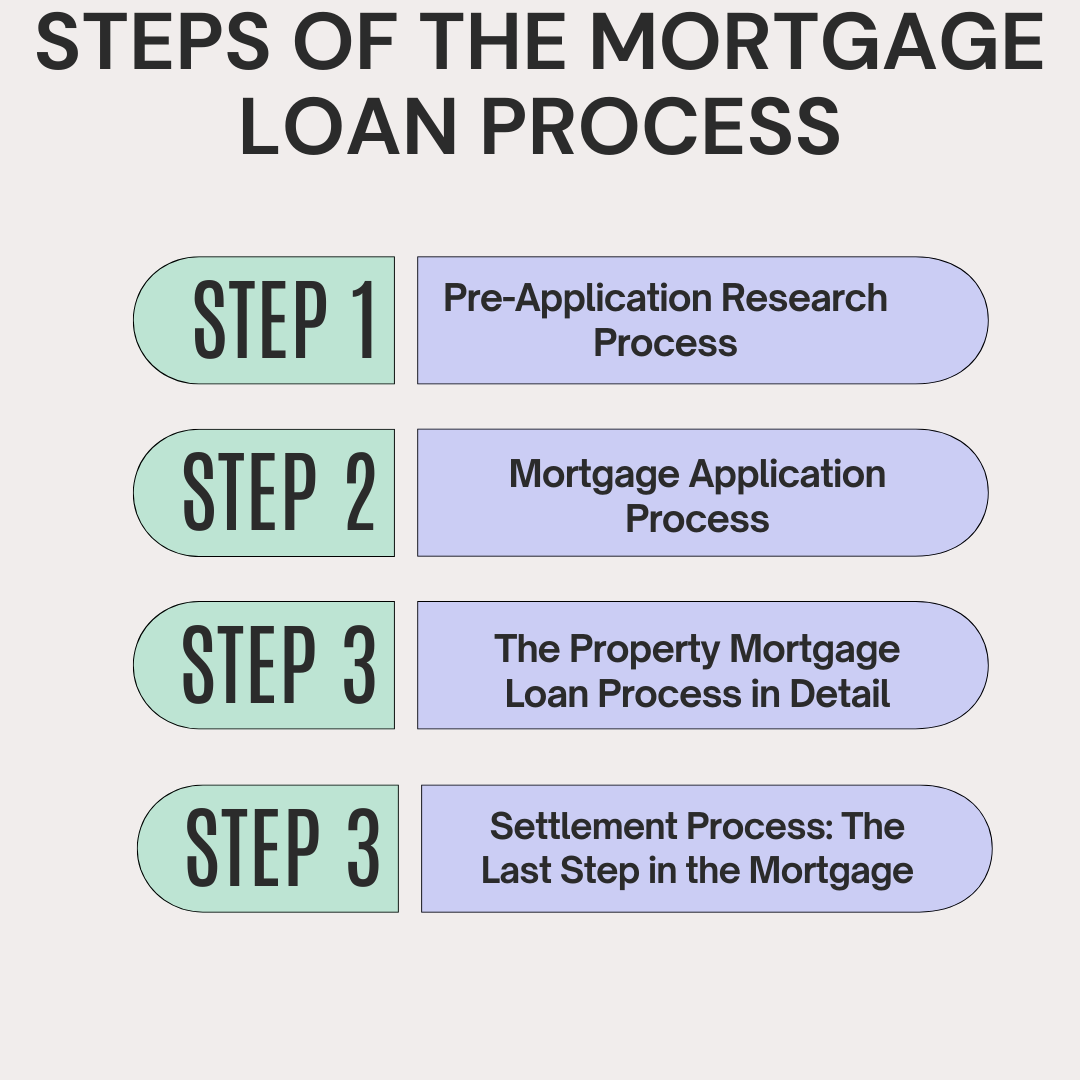
Steps of the Mortgage Loan Process
Let’s check the step-by-step process of the Australian mortgage loan process:
Mortgage loans in Australia proceed through multiple phases, which require planning between the parties involved and proper paperwork documentation. The mortgage loan process in Australia begins with checking your financial health, then ends with ownership transfer through the final settlement. Let’s check it here.
1. Pre-Application Research Process
Pre-application preparation is the most underestimated stage of the Australian mortgage process. Before approaching any lender, you should review your credit score, calculate your borrowing capacity using an online serviceability calculator, and prepare a complete document pack to avoid back-and-forth delays. However, most of the time, lenders will choose a 20% deposit. However, you can obtain a loan with a lower deposit, but you will have to pay additional costs for Lender's Mortgage Insurance (LMI).
At this stage, you should also gather all relevant documents such as tax returns, payslips, bank statements, and identity proofs. Getting pre-qualified by a mortgage broker can also help you understand which loans you're eligible for and at what interest rates. Many applications fail or get delayed because borrowers underestimate the importance of preparation.
|
Pro Tip: You can use a mortgage broker or online calculator to check your monthly repayment and your affordability. |
2. Mortgage Application Process
After completing the homework, you are ready to start the mortgage application. Formal application for a loan can be made at this stage either with or through a bank or a mortgage broker. It requires you to submit all required documents: proof of income, employment history, liabilities and information about the property you would like to purchase. They then assess your capacity to pay back the loan based on vital metrics like your debt-to-income, credit score and employment stability.
When lenders determine your living costs, they take into account the Household Expenditure Measure (HEM). This formula approximates the minimum amount you need to spend monthly based on your household size, location, and standard of living. The lender will take your actual stated expenses, compare them with the HEM, and use the higher of the two. This is even when you state extremely low costs; the lender will impose a minimum floor, which may reduce your borrowing capacity.
The mortgage application process takes several weeks, depending on the lender’s internal procedures and how complete your documents are. It’s during this phase that many applicants feel frustrated due to the back-and-forth communication, especially if they aren’t fully informed about the process beforehand. Clear communication with your broker or loan officer can help reduce misunderstandings and avoid missed paperwork.
3. The Property Mortgage Loan Process in Detail
After your initial application has been submitted, the Property Mortgage Loan Process shifts focus to the property itself. Lenders must ensure the value of the property supports the amount you’re borrowing. To do this, a licensed valuer is assigned to appraise the home based on market trends, recent comparable sales, and the property’s condition. If the valuation comes in lower than expected, you may have to increase your deposit or renegotiate the purchase price. Next comes the assessment phase, where the lender scrutinises all aspects of your financial background again in greater detail.
If all goes well, you’ll receive conditional approval, which means you're likely to get the loan pending final verifications. Formal or unconditional approval is granted once everything checks out, including the valuation, contract review, and legal verification. This is often the most stressful phase for buyers, but it’s also the most critical because any hiccup here can derail the entire deal.
|
Pro Tip: A pre-approval gives you a clear price range and helps you negotiate confidently with sellers. |
4. Settlement Process: The Last Step in the Mortgage
The settlement begins once the formal approval is in place. When the legal and financial tasks are concluded to pass property ownership from the seller to you, this is the period. Once you sign the documents, your lender will finish preparing your loan documents and make sure your solicitor or conveyancer knows what is needed. These documents will be reviewed, and you’ll have to sign them, usually on a regular basis, including a direct debit arrangement for repayments. On settlement day, your lender pays the loan funds to the seller, and you become the property owner.
Settlement periods vary but are usually between 30 and 90 days in Australia. If you’re refinancing, the process is similar, but instead of buying a new property, the new lender pays off your old loan and registers a new mortgage. Regardless of the type, this final stage marks the culmination of the entire mortgage loan process, and proper preparation ensures a smooth transition.
Foreign Buyer Restrictions: April 2025 – March 2027
From April 2025 to March 2027, the Australian Government has introduced a temporary ban on foreign persons purchasing established dwellings. Foreign buyers can only purchase new houses, off-the-plan apartments, and empty land to be built during this period. This is irrespective of the size of the deposit or income. Foreign buyers also require Foreign Investment Review Board (FIRB) approval before purchasing any Australian residential property.
Why Is the Mortgage Process So Challenging for Borrowers?
The practice of mortgaging is common, but the insurance process can be regarded as a ‘minefield’ by borrowers. Borrowers, particularly those who are self-employed, have inconsistent income or have a patchy credit history, must overcome a vast number of hurdles to qualify for a loan. Despite a solid financial footing, strong applicants can get frustrated with the lack of communication with their lenders, follow-ups, and confusing updates of their status.
APRA and ASIC's regulatory reforms — including the 3% serviceability buffer, responsible lending obligations, and updated credit risk standards — have added compliance layers that all lenders must meet, which contributes to longer processing times. The housing market is volatile in major cities, and borrowers have limited time to act before their loans are even approved. This calls for improvement in communication, automation, and efficiency in mortgage processing.
APRA's 3% Serviceability Buffer: The Most Important Approval Factor in 2025–26
APRA requires all Australian lenders to assess a borrower's ability to repay at their loan rate plus 3 percentage points. Example: if your loan rate is 6.00% p.a., the bank stress-tests whether you can afford repayments at 9.00% p.a. This buffer is not negotiable — it is set by APRA (Australian Prudential Regulation Authority) and was confirmed as unchanged in July 2025. It is the primary reason many applicants with adequate income fail pre-approval — their borrowing capacity at the test rate is lower than the property price requires.
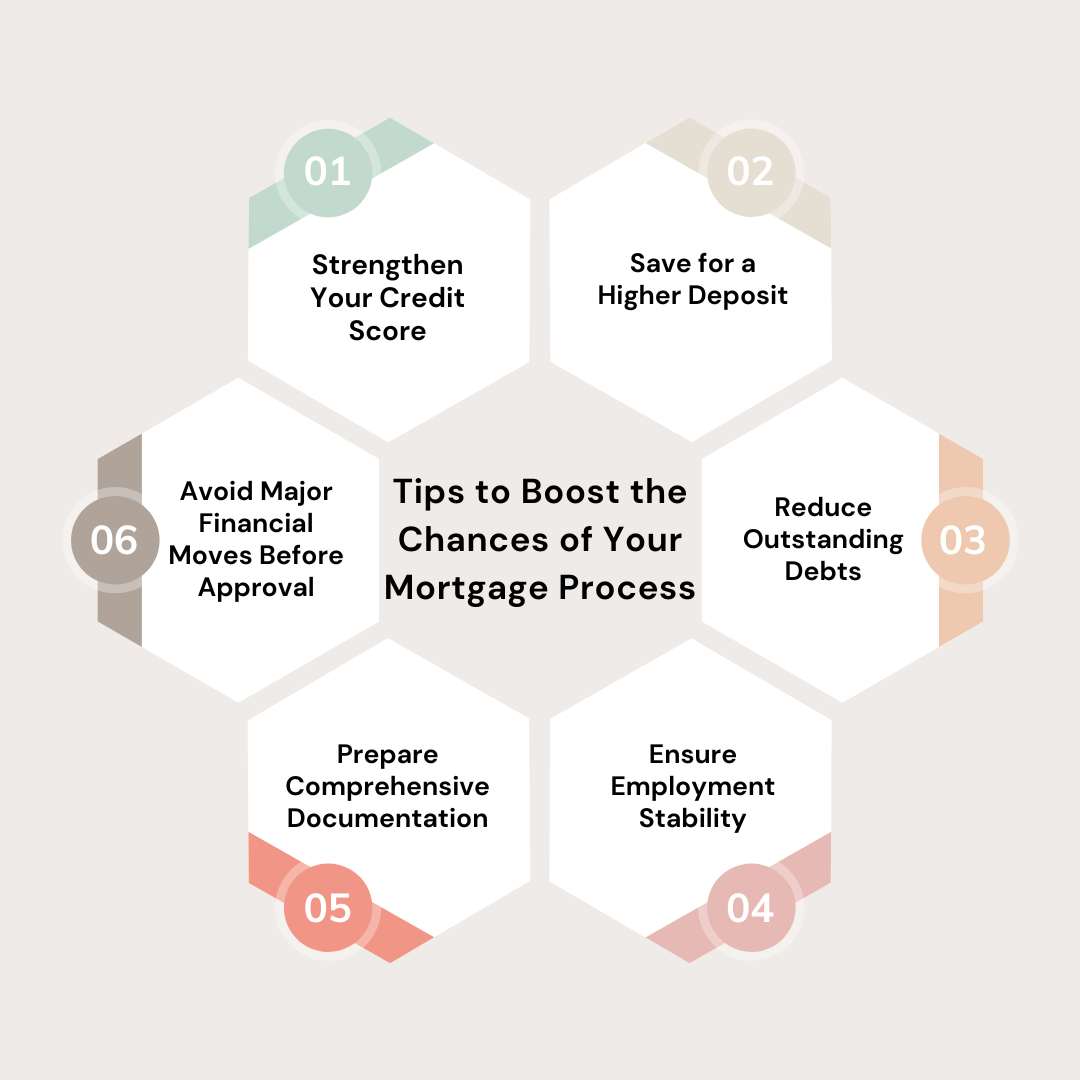
Tips to Boost the Chances of Your Mortgage Process
Whether you are a first-time buyer or you are refinancing an existing loan, getting approved for a mortgage is not only about filling out a form.
If you want to improve your approval chances and potentially secure better interest rates, here are some detailed tips you can follow:
1. Strengthen Your Credit Score: Your credit score is a very important factor in determining your loan eligibility. A high score signals that you are financially responsible and lowers your risk profile. In Australia, credit scores range from 0 to 1200. Anything above 700 is considered 'very good'.
How to improve it:
-
You should pay all bills and credit card balances on time.
-
You should not apply for multiple loans or credit cards in a short span.
-
You can check your credit report to check errors and request corrections if needed.
Lender Insight: Applicants with scores above 750 are more likely to be pre-approved and may qualify for lower interest rates. Scores below 600 often result in rejection by major lenders, though specialist lenders may still approve applications at higher rates.
2. Save for a Higher Deposit: While you can get a loan with as little as 5–10% deposit, lenders prefer 20% or more, especially if you want to avoid LMI (Lenders Mortgage Insurance). A higher deposit also shows financial discipline and reduces the lender’s risk.
Pro Tip: If saving for a 20% deposit feels out of reach, consider using a family guarantor arrangement or explore first home buyer grants offered by the government.
3. Reduce Outstanding Debts: Lenders assess your Debt-to-Income Ratio (DTI) to check how much of your income is already committed to debt repayments. The lower the ratio, the better your chances of approval.
What you can do:
-
Pay off personal loans or credit cards
-
Avoid taking on new debt (like car loans) before applying for a mortgage
-
Consolidate high-interest debts into one manageable payment
Insider Advice: Aim to keep your DTI under 6 to improve your mortgage affordability profile.
Insight!
From February 2026, APRA's DTI cap means banks cannot lend more than 20% of their new mortgages to borrowers with a DTI above 6x. Banks include all the debts in this calculation: credit card limits (unused), car loans, personal loans, student loans, and existing mortgages. Reviewing and cleaning up your credit profile before applying – closing unused cards, settling personal loans – can make a significant difference to your DTI ratio.
4. Ensure Employment Stability: Lenders favour applicants who have been in the same job or industry for at least 6–12 months. Stability indicates a consistent income stream, which reduces risk.
Tips for the self-employed:
-
You can keep your business financials up-to-date
-
You can work with an accountant to prepare clean, lender-friendly tax returns
-
You should avoid declaring low income to save on your taxes
Note: Some lenders offer low-doc loans for self-employed borrowers, but these options come with higher interest rates.
5. Prepare Comprehensive Documentation: One of the biggest causes of delays or rejections is incomplete or inconsistent documentation. Have all your financial documents ready and cross-verified before submission.
Include:
-
Recent payslips (at least 3 months)
-
Tax returns (past 2 years)
-
Bank statements (showing consistent savings and spending patterns)
-
ID documents (passport, driver’s license, Medicare card)
Efficiency Tip: Organise your documents in folders by category and keep digital scans ready to speed up submission to brokers or lenders.
6. Avoid Major Financial Moves Before Approval: Lenders closely monitor your financial activity during the approval period. Large transactions, sudden employment changes, or excessive spending can negatively impact your profile.
Avoid:
-
Switching jobs
-
Making large purchases (e.g., cars or furniture)
-
Opening new lines of credit
Final Word: Keep your finances stable and transparent after settling your loan.
Government Grants and Support for First Home Buyers
The Australian Government and state governments offer a range of schemes to support eligible first home buyers:
- First Home Owner Grant (FHOG): One-time payment of up to 10 000 in most states to first home buyers who purchase a new or significantly renovated home. Dollar amounts and eligibility differ by state.
- First Home Guarantee (FHBG): This enables qualified buyers to buy, with a 5% down payment, without LMI, and the federal government guarantees up to 15% of the loan. There are income and property price restrictions.
- Help to Buy Scheme: A joint equity scheme, in which the government buys up to 30 40 per cent of the house, and the loan size is smaller. Eligibility is means-tested.
Mortgage Broker vs. Going Direct to a Bank
Australian borrowers can apply for a mortgage directly through a lender or through a licensed mortgage broker.
- Mortgage Broker: Obligated by law under the Best Interests Duty (BID) to advise you on the most appropriate loan that best suits your situation, not just the cheapest. Brokers are required to hold an Australian Credit License (ACL). They will typically offer their services at no cost to the borrower, as they are entitled to a lender commission at settlement.
- Direct to Bank: Gives you access to that institution's products only. It may be faster for straightforward applications, but it offers no multi-lender comparison.
For complex applications — self-employed borrowers, high-LVR applications, or credit history issues — a broker's ability to match your profile to the right lender is often the deciding factor.
How Australian Mortgage Brokers Are Outsourcing Loan Processing to Reduce Costs
Loan volumes fluctuate across quarters, but maintaining a full-time in-house processing team means a fixed year-round overhead. To cope with that, most Australian mortgage brokers are now sending their back-office loan processing to India-based teams, saving money without compromising turnaround times or compliance levels.
Tasks commonly outsourced:
- Loan application data entry and document indexing
- Serviceability calculations and credit assessment support
- APRA and ASIC compliance checks
- Income document verification (payslips, tax returns, BAS statements)
- Lender submission packaging
- Loan progression tracking and broker communications
- Title search coordination and settlement support
Why it works: India Standard Time coincides with Australian Eastern Standard Time in the morning, i.e., activities scheduled for the end of the day in Australia are returned the following morning.
Any processing across borders should be in accordance with the Australian Privacy Act 1988 and the NCCP Act. Aone Outsourcing is ISO 27001 certified and has signed data processing agreements. For brokers, mortgage process outsourcing has become a practical solution for managing volume, reducing overhead, and maintaining service quality without expanding headcount.
Final Thoughts: Preparing for a Smooth Mortgage Experience
The mortgage application process doesn’t have to be confusing or stressful if approached with the right knowledge and preparation. Understanding the full picture mortgage services in Australia —from financial assessment to final settlement—gives borrowers the confidence to make the right decisions. Adopting modern solutions like outsourcing mortgage loan processing can improve the broker’s operational efficiency.
As the property market is developing and demand for home loans is rising, those who choose clarity, efficiency, and adaptability will find themselves ahead of the curve. Whether you're buying your first home or expanding your investment portfolio, a well-managed property mortgage loan process is your key to success.
â ï¸General Information Disclaimer: This article is general information only and does not constitute financial, credit, or mortgage advice. It is not produced by a licensed credit provider, Australian Credit License (ACL) holder, or AFSL holder. Always consult a licensed mortgage broker or financial adviser before making borrowing decisions. Regulatory information is sourced from APRA, ASIC, and ATO publications, current as of April 2026.
FAQs
How long does mortgage approval take in Australia?
Pre-approval lasts 2-5 business days. It will take another 5-15 business days after you submit your application to get formal approval. Settlement: The final stage of ownership transfer, typically requiring 30-90 days after the exchange of contracts. The average time between application and settlement is 4-8 weeks.
What credit score do I need for a mortgage in Australia?
Most Australian lenders have a minimum credit score of 600-650. A score of above 700 enhances your chances of approval as well as allows you to receive reduced interest rates. Before applying, you can check your score for free with Equifax, Experian or illion.
What is the APRA serviceability buffer?
APRA obliges all lenders to evaluate whether you will be able to repay the loan at your actual loan rate plus 3% points. If your rate is 6%, the bank assesses repayments at 9%, which directly reduces how much you can borrow.
Can I get a mortgage with a 5% deposit in Australia?
Yes. The First Home Guarantee is an initiative by the Federal Government that enables eligible first-home buyers to purchase a home with a 5% deposit, free of LMI. The state ensures a loan of up to 15%. There are income restrictions and property price ceilings – see existing requirements at housing.gov.au.
What is LMI (Lender's Mortgage Insurance)?
LMI is a protection for the lender, not you, should you default. It is used when the deposit is less than 20% of the property's value (LVR over 80%). The cost is a one-off premium typically added to your loan balance, often ranging from $5,000 to $30,000+.
What documents do I need for a mortgage application?
Usually, you require: two recent payslips, two years of tax returns, three to six months' bank statements, photo ID, and details of all current debts and assets. Self-employed applicants should also have two years of business financial statements and ATO tax returns.
What is pre-approval, and how long does it last?
Pre-approval is an agreement between a lender and a borrower that the lender will lend a certain amount on the condition that the property will be valued in accordance with the agreement. It verifies your borrowing power before putting in an offer. Most pre-approvals are valid for three to six months and can usually be extended on request.
Can I get a mortgage if I am self-employed in Australia?
Yes, but there is a greater demand for documentation. The lenders usually require two years of ATO tax returns, business financial statements and BAS statements. Other lenders offer low-doc loans to self-employed borrowers unable to meet standard criteria, but at higher interest rates than standard products.